

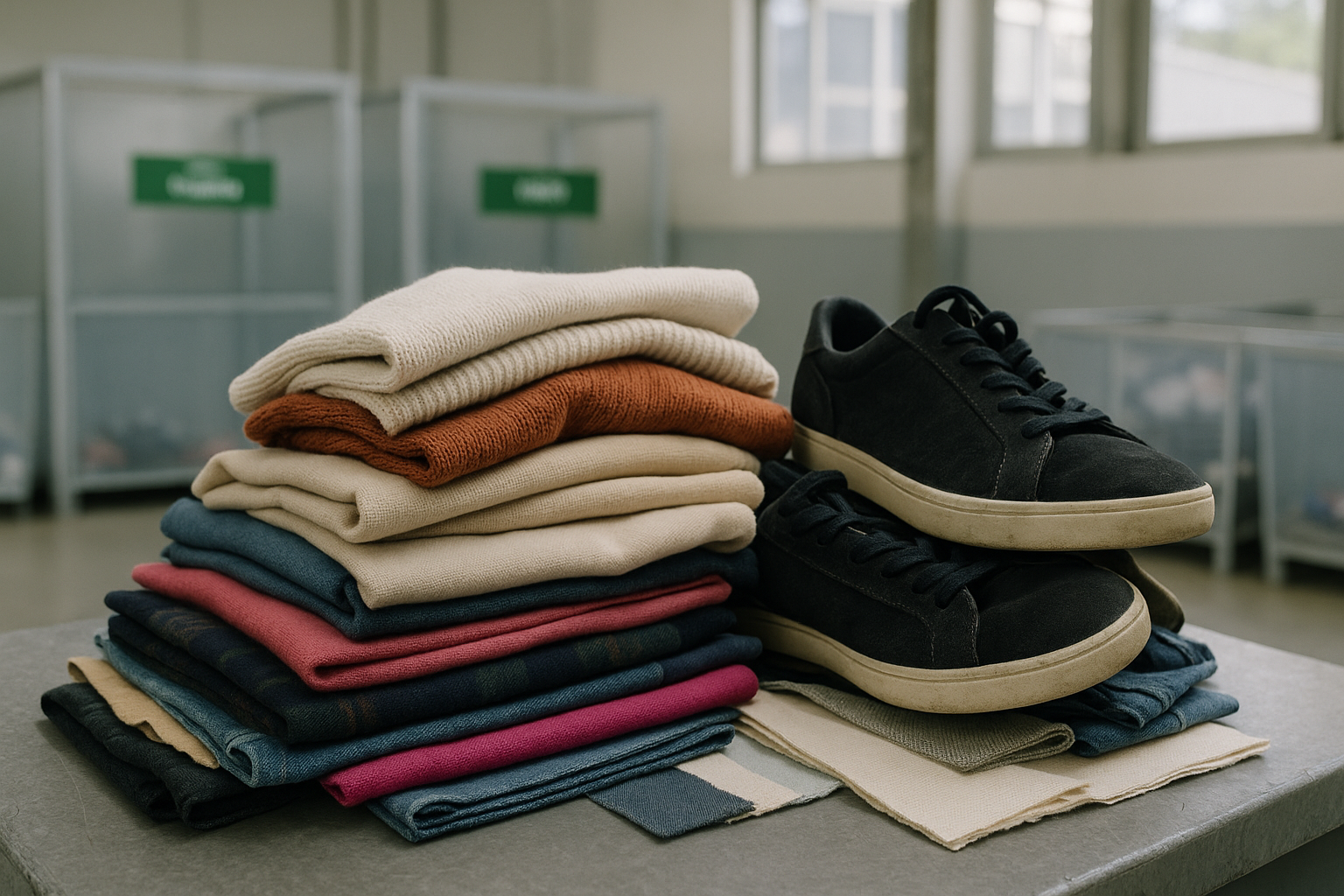

A bill introduced by Representative Kristine Reeves (D‑Federal Way) proposing an extended producer responsibility (EPR) program for textiles failed to advance out of the House Appropriations Committee by the February 2026 deadline, effectively ending its prospects for the 2026 legislative session.
House Bill 1420 proposed that producers of new apparel and textile products—ranging from clothing and handbags to bedding and workwear—would be required to join or establish a producer responsibility organization (PRO). That PRO would administer a statewide system for collection, reuse, repair, recycling, and safe end‑of‑life management of covered textile items. The bill exempted secondhand goods, personal protective equipment, diapers, and women’s menstrual products. Producers with global annual revenues under $1 million would also be exempt. Under its original design, the PRO would conduct a needs assessment by 2028 to evaluate current infrastructures and set performance standards and budgets. The intent was to shift disposal costs from taxpayers and local governments to the businesses manufacturing and selling textile goods. Each PRO would register with the Department of Ecology and undergo annual audits and reporting, with enforcement authority granted to Ecology and penalties appealable to the Pollution Control Hearings Board. Ecological oversight, transparent finance, and consideration for environmental justice were integral to the design. The bill also contemplated eco‑modulated fees to incentivize less polluting and more repairable textiles. Officials involved acknowledged that an operational system could include buy‑back programs or curbside textile collection similar to recycling systems.
After passage in the House Environment & Energy Committee—along party lines—the bill stalled in the Appropriations Committee. Disputes over funding mechanisms, particularly who would pay for the proposed study and assessments, contributed to the bill’s failure to reach the House floor. Even an amendment narrowing the scope to simply authorize a study did not secure sufficient support. Representative Reeves indicated her intention to reintroduce the bill during the next session.
Supporters framed the measure as a correction to “fast‑fashion” waste, aiming to lessen landfill burdens and support a repair economy. Opponents, including representatives of business interests, cautioned that the initiative is premature and urged the Legislature to await outcomes from California’s textile EPR law, which took effect in 2024. A business industry representative notably commented on the complex nature of textile materials—“There’s 15 different types of textiles in my suit jacket”—underscoring concerns over administrative feasibility and cost.
Washington’s Legislature has previously enacted a successful EPR law for paper and packaging—the Recycling Reform Act of 2025—requiring producers to fund recycling infrastructure statewide. While supporters saw textile EPR as the next step toward a broader circular economy, the complexity of textile waste management has delayed progress.
Why this matters: For local governments in Cowlitz County, the failure of HB 1420 means continued responsibility for textile disposal without additional state‑funded infrastructure or systemic support. It keeps intact the status quo in which costs associated with textile waste—whether sent to landfills, incinerated, or exported—remain borne by municipalities and non‑profits. Without a coordinated producer‑funded system, local communities will continue to struggle with building sustainable solutions that reduce landfill dependency and support reuse and repair economies.
Representative Reeves’ proposed framework, if enacted in future sessions, has the potential to reshape how textile waste is managed regionally by leveraging producer responsibility. In the meantime, local officials and service providers will need to consider alternative strategies to manage rising textile waste amid limited resources.
Sources:
- “WA lawmaker’s plan to keep used clothing out of landfills hits dead end,” Washington State Standard
- “HB 1420 – Establishing producer responsibility for textiles,” Washington State Legislature Bill Analysis
- “WA SB6174 – Establishing producer responsibility for textiles,” BillTrack50
- “Textile EPR legislation discussions continue in Washington,” Washington Retail Association
- “Washington Adopts Packaging EPR Law, Marking Major Recycling Reform,” Product Stewardship Institute




Leave a Comment